
Written by a qualified veterinarian
Dog hot weather safety matters whenever temperatures rise — during walks, car rides, outdoor play, beach days, garden time or even short toilet breaks in direct sunlight. Dogs cannot cool themselves as efficiently as people do, and overheating can become serious faster than many owners expect.
The good news is that most heat-related problems can be reduced with simple prevention: cooler walking times, fresh water, shade, rest and early recognition of warning signs.
Why Hot Weather Can Be Risky for Dogs
Dogs mainly release heat by panting. They also lose some heat through their paw pads, but this is limited. When the weather is hot, humid or poorly ventilated, panting may not be enough to keep body temperature under control.
Some dogs need extra care in warm weather. Puppies, senior dogs, overweight dogs, short-nosed breeds, dogs with thick coats and dogs with heart or breathing problems can overheat more easily. These dogs should avoid intense exercise and should be watched closely even during short outdoor activity.
Signs Your Dog May Be Overheating
Heat stress can progress quickly. Contact a veterinarian immediately if your dog shows signs that seem severe, sudden or unusual.
Warning signs may include:
- Heavy or excessive panting
- Drooling more than usual
- Fast or noisy breathing
- Weakness, wobbliness or trouble standing
- Very red, pale or abnormal-looking gums
- Vomiting or diarrhea
- Confusion, agitation or unusual behavior
- Collapse or seizures
Do not wait for all signs to appear. If your dog looks unwell in the heat, it is safer to stop the activity, cool them carefully and seek veterinary advice early.
Dog Hot Weather Safety Tips
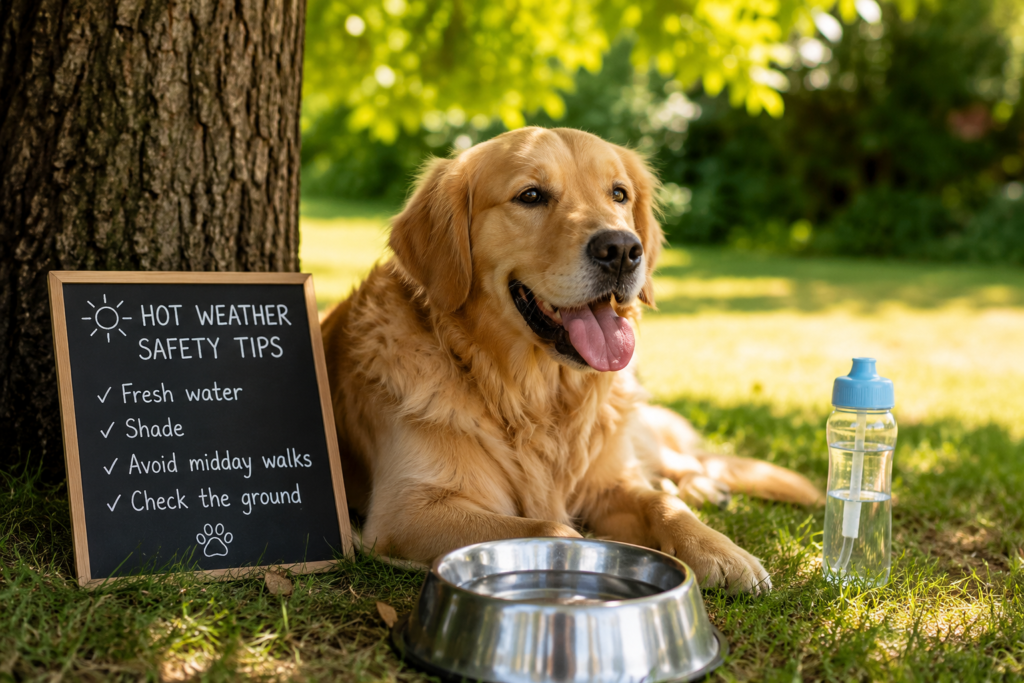
1. Walk Early or Late
Avoid walking your dog during the hottest part of the day. Early morning and late evening are usually safer, especially during summer heatwaves.
Keep walks shorter when the weather is hot. A calm toilet break may be safer than a long walk at midday.
2. Always Provide Fresh Water
Your dog should always have access to clean, fresh water. Bring water with you during walks, car trips and outdoor activities. Offer small breaks often rather than waiting until your dog is already heavily panting.
3. Avoid Hot Asphalt
Pavement, asphalt and sand can become hot enough to burn paw pads. Before walking, place the back of your hand on the ground for a few seconds. If it feels too hot for your skin, it is too hot for your dog’s paws.
Choose grass, shaded paths or cooler surfaces whenever possible.
4. Never Leave Your Dog in a Parked Car
Never leave a dog inside a parked vehicle, even for a few minutes. Cars can heat up quickly, even with the windows slightly open or when the outside temperature does not feel extreme.
5. Provide Shade, Rest and Airflow
If your dog is outside, make sure there is shade, fresh water and a cool place to rest. Avoid forcing long play sessions, running or training in hot weather.
Indoors, keep your dog in a cooler room if possible. Fans, air conditioning, cooling mats and good ventilation can help, especially for high-risk dogs.
6. Be Extra Careful With High-Risk Dogs
Short-nosed breeds such as Bulldogs, Pugs and French Bulldogs can struggle more in heat because their breathing is less efficient. Senior dogs, puppies, overweight dogs and dogs with heart or respiratory disease also need extra protection.
For these dogs, avoid hot-hour walks, keep activity gentle and speak with your veterinarian if you are unsure how much exercise is safe.
Should You Walk Your Dog in Extreme Heat?
In extreme heat, skipping a walk is often the safer choice. Dogs do not need a full walk at any cost. A short toilet break, indoor enrichment, gentle training or a food puzzle can be a better option on very hot days.
If your dog still needs to go outside, choose shaded areas, walk slowly and watch their breathing. Stop immediately if your dog starts panting heavily, slowing down, seeking shade, lying down or refusing to continue.
Humidity is important too. When the air is humid, panting becomes less effective, which means dogs may overheat even when the temperature does not look extreme on the weather app.
Quick Summer Safety Checklist for Dog Owners
- Walk your dog early in the morning or later in the evening
- Bring fresh water on longer walks and car trips
- Check pavement temperature before walking on asphalt
- Choose shade and cooler surfaces when possible
- Avoid intense running, training or play during hot hours
- Never leave your dog inside a parked car
- Watch high-risk dogs more closely
- Contact a veterinarian if your dog shows serious overheating signs
Dog hot weather safety is mainly about prevention. It is much easier to avoid overheating than to treat a serious heat emergency after it has started.
What to Do If Your Dog Seems Too Hot
If your dog seems too hot, move them to a cool, shaded and well-ventilated area immediately. Stop exercise and begin gentle cooling while contacting a veterinarian for advice.
You can use cool water and airflow to help lower body temperature. Offer small amounts of water, but do not force your dog to drink. Avoid ice-cold water or aggressive cooling methods unless your veterinarian specifically tells you what to do.
Seek veterinary help quickly if your dog is weak, confused, vomiting, breathing abnormally, collapsing or not improving. Heatstroke can affect several organs and may need urgent veterinary treatment even if your dog seems better after cooling.
Final Thoughts
Hot weather safety is simple, but it is not something to ignore. Fresh water, shade, cooler walking times and careful attention to early warning signs can make summer much safer for your dog.
When in doubt, choose the safer option. Shorten the walk, move to shade and speak with your veterinarian if your dog seems unwell.
Veterinary Note
Heat-related illness can become life-threatening. If your dog shows collapse, severe weakness, vomiting, diarrhea, abnormal breathing, confusion, seizures or does not recover quickly after moving to a cooler place, contact a veterinarian or emergency veterinary clinic immediately. This article is for general education and does not replace an in-person veterinary examination.