
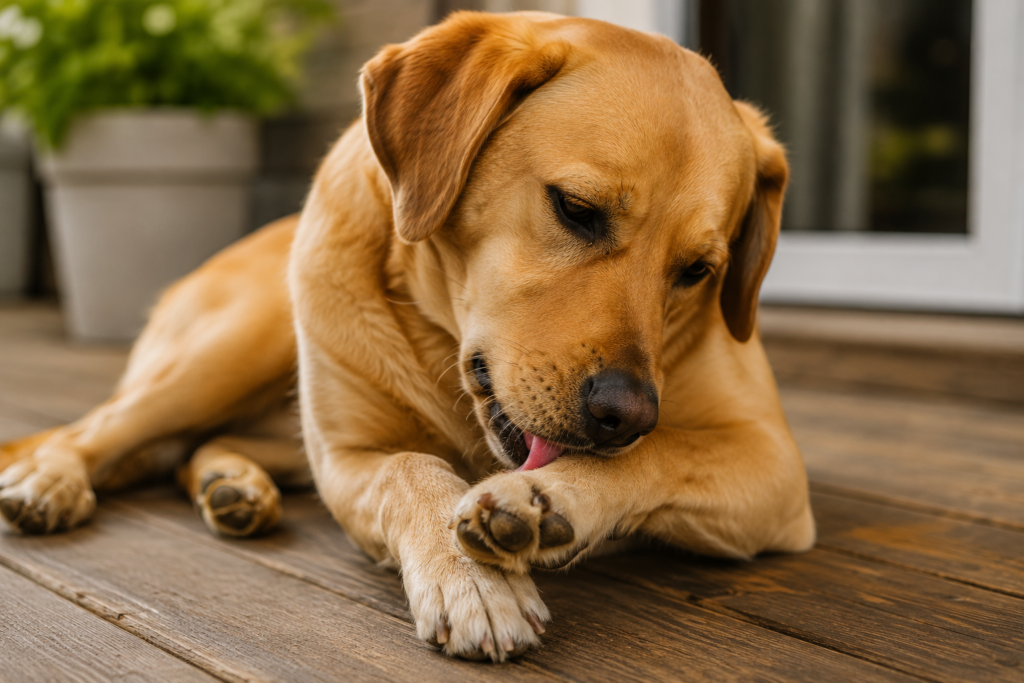
Why does my dog keep licking its paws? Occasional paw licking can be part of normal grooming, especially after a walk. However, frequent, intense, or persistent licking may point to irritation, allergies, injury, infection, pain, parasites, or stress.
Frequent paw licking can be linked to irritation, allergies, injury, infection, pain, or even stress. The appearance of the paw and any other changes in your dog’s behavior can help determine how quickly veterinary attention may be needed.
Watch the Short Video
A quick overview of common reasons dogs may lick their paws.
Is It Normal for Dogs to Lick Their Paws?
Occasional paw licking is usually normal. A dog may briefly lick its paws after walking on wet ground, grass, sand, or another unfamiliar surface.
The behavior becomes more concerning when it is:
- frequent or difficult to interrupt;
- focused mainly on one paw;
- accompanied by redness, swelling, odor, or discharge;
- causing hair loss or damaged skin;
- combined with limping, discomfort, or changes in activity.
Persistent licking can make an existing problem worse. Moisture and repeated friction may further irritate the skin and increase the risk of secondary infection.
Common Reasons Why Dogs Lick Their Paws
1. Environmental Irritation
Grass, pollen, dust, household cleaning products, road salt, and other substances can irritate a dog’s paws. Some dogs begin licking shortly after a walk or after spending time outdoors.
If the licking happens mainly after walks, gently rinse the paws with clean lukewarm water and dry them thoroughly. Avoid applying human creams or disinfectants unless your veterinarian recommends them.
2. Allergies
Allergies are a common reason for repeated paw licking. Dogs with environmental or food-related allergies may experience itching around the paws, ears, face, abdomen, or other areas of the body.
Possible additional signs include:
- redness between the toes;
- recurrent ear problems;
- scratching or rubbing the face;
- skin irritation in several areas;
- seasonal changes in the severity of itching.
Paw licking alone does not confirm an allergy. A veterinarian may need to examine the skin and consider other possible causes before recommending treatment.
3. A Cut, Thorn, Splinter, or Foreign Object
If a dog suddenly begins licking one paw, check carefully for a small injury or something trapped between the toes or paw pads.
Look for:
- small cuts or punctures;
- thorns or plant material;
- broken nails;
- cracked paw pads;
- stones, dirt, or debris between the toes;
- swelling or tenderness.
Do not pull out a deeply embedded object or attempt to treat a serious injury at home. If your dog appears painful, is limping, or will not allow the paw to be examined, contact your veterinarian.
4. Skin or Paw Infection
Bacterial or yeast infections can cause itching, redness, discomfort, and persistent licking. Infections may develop after the skin has already been irritated by allergies, moisture, injury, or another problem.
Signs that may suggest infection include:
- unpleasant odor;
- red or darkened skin;
- swelling between the toes;
- discharge or crusting;
- moist, irritated skin;
- increasing sensitivity when the paw is touched.
A veterinary examination is important because different types of infection may require different treatment.
5. Pain
Dogs sometimes lick an area that feels painful, even when there is no obvious skin problem. Pain may come from a nail injury, joint discomfort, arthritis, a sprain, or another condition affecting the leg or paw.
If the paw looks normal but your dog continues licking it, watch for limping, stiffness, reluctance to walk, difficulty getting up, or reduced activity.
6. Parasites
Fleas, mites, and other parasites can cause itching and skin irritation. The paws may not be the only affected area, so also look for scratching, hair loss, small scabs, or irritation elsewhere on the body.
A veterinarian can help identify the cause and recommend an appropriate parasite-control plan.
7. Stress, Boredom, or Compulsive Behavior
Some dogs lick their paws when they are anxious, under-stimulated, or struggling with changes in their environment. Repetitive licking may become a habit, especially if the behavior continues for a long time.
However, behavioral causes should usually be considered only after medical problems have been ruled out. Pain, allergy, infection, and irritation are common and should not be overlooked.
What Should You Check at Home?
If your dog allows it and is not in obvious pain, gently examine each paw in good light.
Check:
- the paw pads;
- between each toe;
- the nails and nail beds;
- the top and underside of the paw;
- whether one paw looks different from the others.
Note when the licking happens, how long it lasts, whether it affects one or several paws, and whether it is worse after walks, meals, or certain activities. This information can be useful during a veterinary consultation.
What Not to Do
Avoid using human medications, essential oils, alcohol, hydrogen peroxide, or strong disinfectants on your dog’s paws without veterinary advice. Some products may irritate the skin, delay healing, or be unsafe if licked.
Do not repeatedly cover a moist or infected paw without guidance. Trapped moisture can sometimes worsen irritation.
When Should You Contact a Veterinarian?
Arrange a veterinary examination if the licking is persistent, repeated daily, or becoming more intense.
Seek veterinary advice promptly if you notice:
- swelling or significant redness;
- bleeding, discharge, or an open wound;
- a strong or unusual odor;
- hair loss or thickened skin;
- limping or difficulty walking;
- a broken or damaged nail;
- pain when the paw is touched;
- licking that prevents rest or sleep;
- signs affecting several parts of the body;
- a problem that continues despite gentle cleaning and observation.
Contact a veterinarian urgently if there is severe pain, heavy bleeding, rapid swelling, suspected toxin exposure, a deep wound, or a foreign object that cannot be safely removed.
How a Veterinarian May Investigate Paw Licking
The veterinarian may examine the paws, nails, skin, ears, gait, and other areas of the body. Depending on the findings, further tests may be recommended to look for infection, parasites, allergies, injury, or an underlying source of pain.
Treatment depends on the cause. It may involve cleaning and protecting an injury, treating an infection or parasite problem, managing allergies, relieving pain, or making changes to the dog’s daily routine and environment.
Can Paw Licking Be Prevented?
Not every cause can be prevented, but regular paw care may help reduce irritation and detect problems earlier.
- Check the paws after walks.
- Rinse away salt, mud, sand, or irritating substances.
- Dry carefully between the toes.
- Keep nails at an appropriate length.
- Use consistent veterinarian-recommended parasite prevention.
- Monitor recurrent ear or skin problems.
- Provide regular exercise and mental enrichment.
Dogs with recurring paw problems may need an individual long-term management plan developed with their veterinarian.
Frequently Asked Questions
Why is my dog licking only one paw?
Licking one paw may suggest a local problem such as a cut, foreign object, broken nail, sting, infection, or pain. Examine the paw gently and contact your veterinarian if the licking continues or the dog appears uncomfortable.
Why does my dog lick its paws after a walk?
The paws may have been exposed to grass, pollen, dust, mud, road salt, or another irritating substance. Rinsing with clean water and drying well may help, but recurrent symptoms should be assessed by a veterinarian.
Can paw licking be caused by allergies?
Yes, allergies are one possible cause, especially when several paws are affected or when the dog also has ear or skin problems. Paw licking alone is not enough to diagnose an allergy.
Should I stop my dog from licking?
Excessive licking can worsen irritation, but simply stopping the behavior does not treat the cause. A protective collar may occasionally be recommended, but it is important to identify why the dog is licking.
Can I use paw balm?
A dog-safe paw balm may help in some cases of dry or mildly cracked pads, but it is not suitable for every condition. Do not apply products to red, swollen, infected, or painful paws without veterinary advice.
Final Thoughts
Occasional paw licking is often harmless, but persistent or intense licking deserves attention. Check the paws carefully, observe when the behavior occurs, and look for redness, swelling, odor, injury, pain, or changes in movement.
Early veterinary assessment can help identify the underlying cause before repeated licking leads to further skin damage.
Written by a veterinarian for Pawsvexa.
This article is intended for general educational purposes and does not replace an examination, diagnosis, or treatment plan from your veterinarian.