
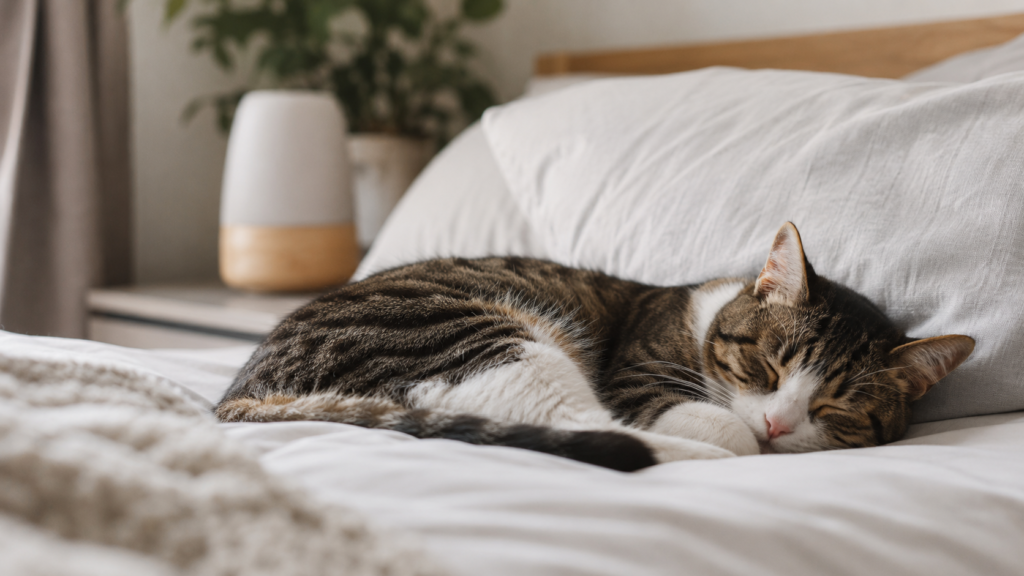
Why does my cat sleep near my head? Many cat owners notice this behavior, especially when their cat chooses the pillow, the top of the bed, or the space close to their face during sleep.
In most cases, this behavior is normal. For many cats, sleeping near the head may be linked to warmth, familiar scent, comfort, and routine. It can also be a sign that your cat feels safe in that sleeping area.
1. Your Pillow May Feel Warm and Comfortable
Cats naturally seek warm, comfortable resting spots. Your pillow and the area near your head may stay warmer than other parts of the bed, especially during the night.
This can make the space feel cozy and predictable for your cat. If your cat often chooses the same sleeping spot, warmth may be one of the simple reasons behind it.
2. Your Scent May Help Your Cat Feel Safe
Cats rely strongly on scent. Your pillow often carries your familiar smell, which may help your cat feel calm and secure.
For some cats, sleeping near your head may be less about attention and more about choosing a place that feels familiar, safe, and emotionally comforting.
3. Your Head Usually Moves Less During Sleep
Many people move their arms and legs while sleeping. The area near the head may feel calmer because it usually moves less than the rest of the body.
This may make the pillow area a more stable place for a cat to rest, especially for cats that prefer quiet and predictable sleeping spots.
4. It Can Become Part of a Nightly Routine
Cats are creatures of habit. If your cat has slept near your head before and felt safe there, the behavior may simply become part of a familiar nightly routine.
Over time, your cat may return to the same spot because it has become associated with comfort, safety, and rest.
Does This Mean My Cat Loves Me?
It can be a sign of trust and comfort, but it is important not to interpret every behavior in only one way. Cat behavior usually has several possible explanations.
Sleeping near your head may be connected to affection, but it may also be linked to warmth, scent, reduced movement, and habit. The best way to understand your cat is to look at the full body language and overall behavior.
When Should You Be Concerned?
This behavior is usually normal. However, sudden changes in sleeping habits should be watched carefully.
Contact your veterinarian if your cat suddenly becomes restless, hides more than usual, seems painful, has trouble breathing, loses appetite, or shows any signs of illness.
A change in where or how your cat sleeps can sometimes be linked to discomfort, stress, or a medical issue, especially when it appears suddenly.
Final Thoughts
If your cat sleeps near your head, it may be choosing a place that feels warm, familiar, safe, and calm. For many cats, this is simply part of a comforting routine.
Every cat is different, so always observe your cat’s normal habits and behavior. Small changes can be normal, but sudden or unusual changes should not be ignored.
Written by a veterinarian for Pawsvexa — smart pet care, guided by a veterinarian.