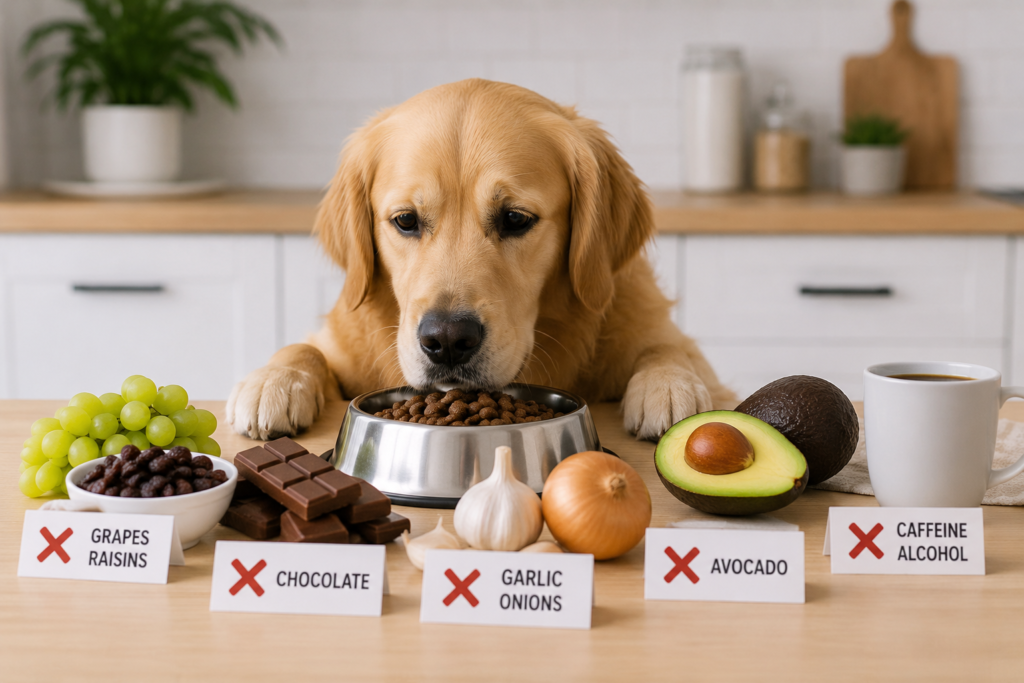
Some human foods are perfectly safe for people but dangerous for dogs. A small bite of the wrong food can sometimes cause vomiting, weakness, seizures, kidney problems or worse.
This guide covers 10 foods dogs should never eat, why they can be risky, and what you should do if your dog eats something dangerous. Below are the foods dogs should never eat and the warning signs every dog owner should know.
Important: This article is for general education only. If your dog has eaten something toxic, contact your veterinarian or an animal poison control service immediately.
1. Chocolate
Chocolate is one of the best-known dangerous foods for dogs. It contains theobromine and caffeine, which dogs cannot process as well as people.
Dark chocolate, cocoa powder and baking chocolate are usually more dangerous than milk chocolate.
Possible signs can include:
- vomiting
- diarrhea
- restlessness
- fast heartbeat
- tremors
- seizures
What to do:
If your dog eats chocolate, do not wait for symptoms. Contact your veterinarian and tell them the type of chocolate, the amount eaten and your dog’s weight.
2. Grapes and Raisins
Grapes and raisins can be very dangerous for dogs. In some dogs, they may cause serious kidney problems.
The difficult part is that there is no guaranteed “safe” amount. Some dogs may react badly even after eating a small quantity.
Avoid:
- fresh grapes
- raisins
- sultanas
- foods containing raisins, such as cakes or cereals
What to do:
Call your veterinarian quickly if your dog eats grapes or raisins, even if your dog seems normal at first.
3. Xylitol
Xylitol is a sweetener found in many sugar-free products. It is especially dangerous for dogs.
It may be found in:
- sugar-free gum
- candies
- some peanut butters
- toothpaste
- baked goods
- “low sugar” products
Xylitol can cause a sudden drop in blood sugar and may also affect the liver.
Possible signs can include:
- vomiting
- weakness
- trouble walking
- collapse
- seizures
What to do:
This is an emergency. If your dog eats anything containing xylitol, contact a veterinarian or emergency clinic immediately.
3. Onions
Onions can damage a dog’s red blood cells and may lead to anemia. This can happen with raw, cooked, fried or powdered onion.
Be careful with:
- soups
- sauces
- baby food
- leftovers
- seasoning mixes
Possible signs can include:
- weakness
- pale gums
- vomiting
- fast breathing
- dark urine
What to do:
If your dog eats onion, especially a large amount or repeated small amounts, call your veterinarian.
4. Garlic
Garlic belongs to the same family as onions and can also be harmful to dogs.
Garlic powder can be especially risky because it is concentrated and often hidden in cooked food.
Avoid giving dogs:
- garlic bread
- seasoned meat
- sauces
- leftovers with garlic
- spice mixes
What to do:
Do not try to treat this at home. Contact your veterinarian for advice.
5. Alcohol
Dogs should never drink alcohol. Even small amounts can be dangerous.
Alcohol can be found in:
- beer
- wine
- cocktails
- desserts
- fermented foods
- raw bread dough
Possible signs can include:
- vomiting
- poor coordination
- sleepiness
- slow breathing
- collapse
What to do:
Alcohol poisoning can be serious. Contact a veterinarian immediately.
6. Caffeine
Caffeine can overstimulate a dog’s nervous system and heart.
Keep dogs away from:
- coffee
- tea
- energy drinks
- caffeine pills
- some supplements
- coffee grounds
Possible signs can include:
- restlessness
- fast heartbeat
- panting
- shaking
- seizures
What to do:
If your dog eats or drinks caffeine, call your veterinarian and explain what product was involved.
7. Macadamia Nuts
Macadamia nuts can make dogs very sick. The exact reason is not fully understood, but dogs may develop weakness, vomiting and trouble walking.
Avoid:
- macadamia nuts
- cookies with macadamia nuts
- nut mixes
- desserts containing macadamias
Possible signs can include:
- weakness in the back legs
- vomiting
- tremors
- fever
- tiredness
What to do:
Contact your veterinarian, especially if your dog ate a large amount or is showing symptoms.
8. Avocado
Avocado can cause stomach upset in some dogs, and the large pit can also be a choking or blockage risk.
The fatty content may also upset the digestive system, especially in sensitive dogs.
Avoid giving:
- avocado flesh
- avocado skin
- avocado pit
- guacamole
What to do:
If your dog eats avocado and shows vomiting, diarrhea, pain or loss of appetite, call your veterinarian.
9. Raw Yeast Dough
Raw yeast dough can expand inside a dog’s stomach and create gas. It can also produce alcohol as it ferments.
This can become dangerous quickly.
Possible signs can include:
- bloated stomach
- pain
- restlessness
- vomiting
- weakness
- collapse
What to do:
If your dog eats raw yeast dough, contact a veterinarian immediately.
What Should You Do If Your Dog Eats Something Dangerous?
Stay calm, but act quickly.
Try to collect this information before calling the vet:
- what your dog ate
- how much they ate
- when they ate it
- your dog’s weight
- any symptoms you can see
Do not try to make your dog vomit unless a veterinarian tells you to. Some situations can become worse if vomiting is forced.
Final Thoughts
The safest approach is simple: keep risky human foods away from dogs and be careful with leftovers, snacks and sugar-free products.
If you are unsure whether something is safe, do not guess. Ask your veterinarian first.
Your dog depends on you to make safe choices — and prevention is always easier than emergency treatment.
Sources & Safety Note
This guide is for general education only and does not replace veterinary advice. If your dog has eaten something potentially toxic, contact your veterinarian or an animal poison control service immediately.