
Written by a qualified veterinarian
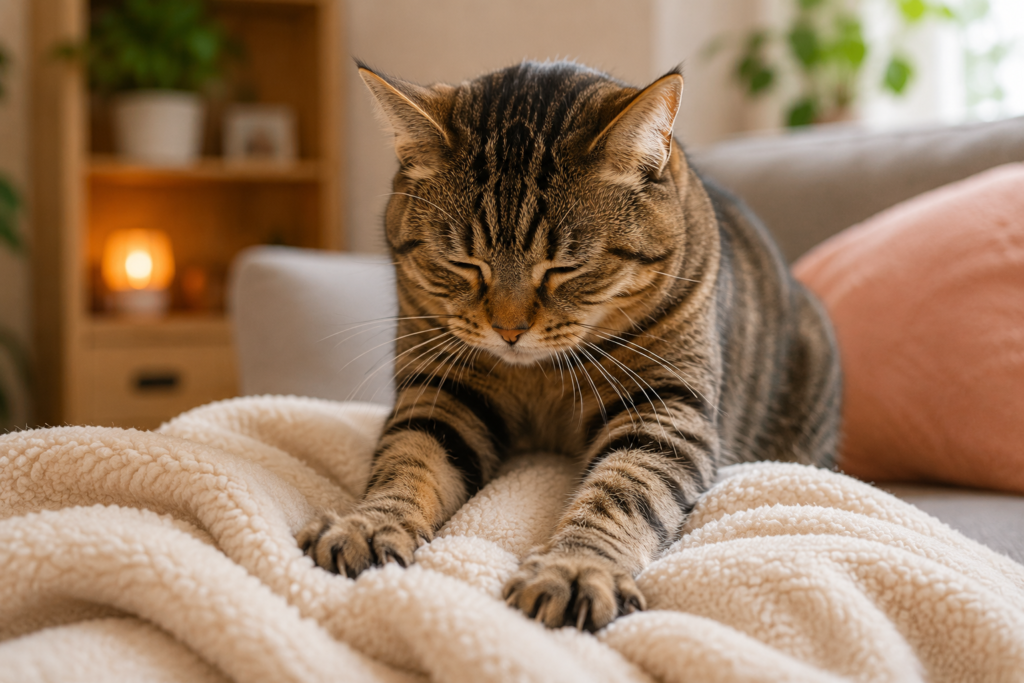
Why do cats knead with their paws? Kneading is a common feline behavior where a cat rhythmically presses their front paws into a soft surface, such as a blanket, bed, pillow or your lap.
Many people call this behavior “making biscuits,” but from a pet care point of view it is more than just a cute habit. Kneading can be linked to comfort, kittenhood, scent communication, relaxation and sometimes stress.
Most of the time, kneading is normal. It often means your cat feels safe, settled and comfortable. However, a sudden change in kneading or any behavior that appears together with pain, hiding, aggression, appetite changes or overgrooming should be taken seriously.
1. Kneading Starts When Cats Are Kittens
One of the main reasons cats knead is that the behavior begins very early in life. Kittens press their paws against their mother’s belly while nursing. This movement is associated with feeding, warmth and security.
Many adult cats continue this movement later in life, especially when they are relaxed or resting on something soft. In this situation, kneading is usually a normal comfort behavior.
What it usually means:
Your cat may be showing comfort, trust and a feeling of safety.
2. Your Cat Feels Safe and Relaxed
Cats often knead when they are calm. You may notice it when your cat is lying on a soft blanket, sitting on your lap, purring or getting ready to sleep.
For many cats, kneading is part of a relaxing routine. It may happen before they settle down for a nap or when they are enjoying a quiet moment with their owner.
What to do:
Let your cat enjoy the moment. If their claws are uncomfortable, place a thick blanket between your cat and your skin instead of pushing them away or punishing the behavior.
3. Kneading Can Be a Sign of Affection
If your cat kneads your lap, chest or blanket while staying close to you, it may be part of their bonding behavior. Cats show affection in different ways, and kneading can be one of them.
Some cats also purr, rub their face on you, blink slowly, follow you from room to room or sleep near you when they feel bonded and secure.
What it usually means:
Your cat may see you as a safe and familiar presence.
4. Cats Have Scent Glands in Their Paws
Cats use scent as part of their communication. They have scent glands in different areas of the body, including the paws. When a cat kneads, they may leave scent signals on the surface they are pressing.
This does not mean your cat is doing something wrong. It is a natural way for cats to mark familiar places, objects or people as part of their safe environment.
What it usually means:
Your cat may be marking a blanket, bed, cushion or person as familiar and safe.
5. Kneading May Help Cats Prepare a Resting Spot
Another possible reason cats knead is linked to preparing a comfortable resting area. Before resting, some cats press, turn and adjust the surface underneath them.
Modern indoor cats may show this behavior on blankets, beds, pillows or soft furniture before lying down.
What to do:
Offer soft, clean resting places. If your cat kneads before sleep, a washable blanket can protect your furniture and make the behavior more comfortable for both of you.
6. Some Cats Knead When They Are Excited
Kneading is not always sleepy behavior. Some cats knead when they are excited to see their owner, when they expect food or when they are enjoying attention.
This may happen together with purring, rubbing, tail movement or walking in circles near you.
What it usually means:
Your cat may be happy, stimulated or expecting something positive.
7. Kneading Can Sometimes Be Linked to Stress
Most kneading is normal, but context matters. If kneading suddenly becomes excessive or appears together with other behavior changes, it may be a sign that your cat is trying to self-soothe.
Stress-related kneading is more concerning if it appears with hiding, overgrooming, appetite changes, unusual vocalization, aggression, litter box problems or sudden clinginess.
What to do:
Look at the full picture. Ask yourself whether anything changed recently, such as a move, new pet, new baby, loud noise, change in routine or conflict with another cat.
8. Should You Stop Your Cat From Kneading?
Usually, no. Kneading is a natural cat behavior and does not need to be stopped if your cat is relaxed and healthy.
The main issue is usually claw discomfort or fabric damage. In that case, manage the environment gently rather than punishing your cat.
Helpful options include:
- keep your cat’s nails trimmed
- place a thick blanket on your lap
- offer soft beds and washable blankets
- redirect your cat calmly if needed
- avoid shouting, pushing or punishment
Punishment can increase stress and may damage trust. A calm redirection is usually a better choice.
9. When Should You Contact a Veterinarian?
Kneading alone is usually not a medical problem. But sudden behavior changes can sometimes be linked to pain, stress or illness, especially in cats because they often hide discomfort.
Contact your veterinarian if kneading appears together with:
- sudden aggression or irritability
- hiding more than usual
- loss of appetite or reduced drinking
- excessive grooming or hair loss
- limping, paw pain or sensitivity when touched
- crying, unusual vocalization or restlessness
- litter box changes
- major or sudden behavior changes
If the behavior is new, intense or unusual for your cat, a veterinary check can help rule out pain or health problems.
Final Thoughts
Kneading is usually a normal and harmless cat behavior. In many cases, it means your cat feels comfortable, relaxed and emotionally safe.
Your cat may knead because of kittenhood habits, comfort, scent marking, affection, excitement or preparation for rest. The most important thing is to look at the whole cat, not just one behavior.
If your cat is eating well, moving normally, using the litter box and behaving like themselves, gentle kneading is usually nothing to worry about. If kneading changes suddenly or comes with other signs, contact your veterinarian.
Veterinary Note
Kneading is usually normal feline behavior and often reflects comfort or security. However, sudden behavior changes in cats can be an early sign of pain, stress or illness. If your cat becomes aggressive, hides, stops eating, overgrooms, limps, vocalizes unusually, changes litter box habits or seems unwell, contact a veterinarian. This article is for general education and does not replace an in-person veterinary examination.