
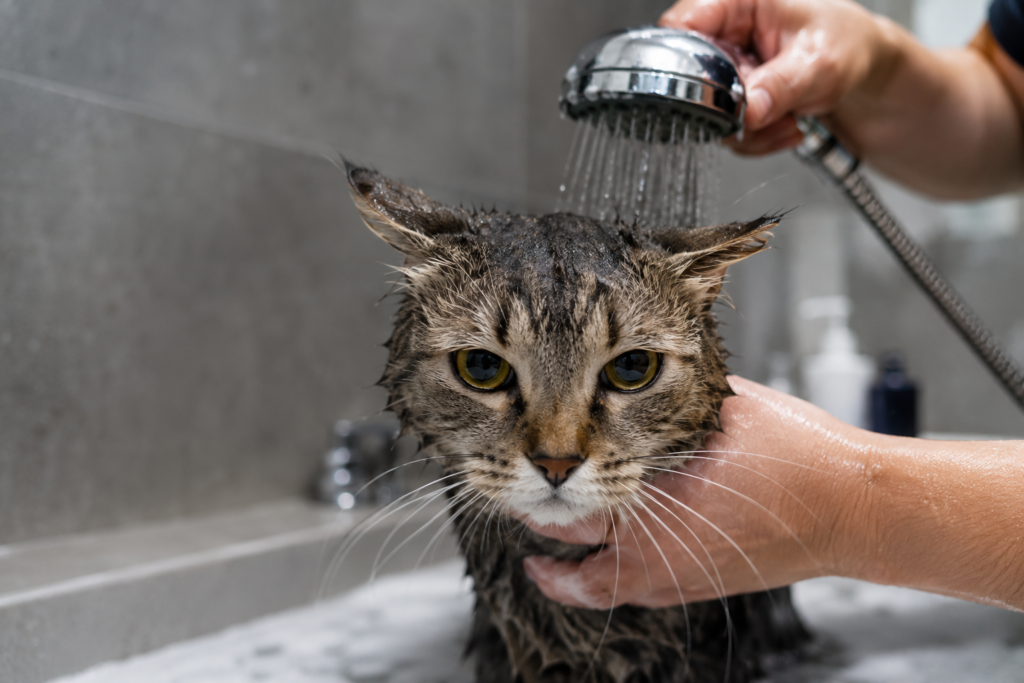
Written by a qualified veterinarian.
Do cats need baths? In most cases, healthy adult cats do not need
regular bathing. Cats are efficient groomers and can usually keep their coats clean
without routine washing. For many cats, gentle brushing and occasional targeted
cleaning are more useful—and considerably less stressful—than a full bath.
However, the idea that cats should never be bathed is also too simplistic. A bath
may be necessary when something potentially harmful is on the coat, when age or
illness prevents normal grooming, when the fur is heavily soiled, or when a
veterinarian prescribes bathing as part of a skin-treatment plan.
The correct approach is not to follow a fixed bathing schedule. It is to decide
whether the individual cat has a genuine medical, hygiene, or safety reason to
need a bath—and whether bathing can be performed without causing unnecessary
stress or injury.
Watch: Do Cats Need Baths?
Prefer watching first? Watch the short video, then continue reading the
complete veterinary guide below.
Do Cats Need Baths? The Simple Answer
Most healthy adult cats rarely need baths. A bath is usually appropriate only
when the cat cannot clean itself properly, the coat is heavily contaminated,
a potentially harmful substance must be removed, or a veterinarian has
recommended a specific medicated treatment.
[1]
There is no universal rule such as bathing every week or every month. A healthy
short-haired indoor cat may never need a full bath, while an older, overweight,
arthritic, hairless, long-haired, or medically affected cat may require
individual grooming support.
Regular observation is more important than following a calendar. Changes in
coat condition, odor, grooming behavior, mobility, skin appearance, or tolerance
of touch can help determine whether cleaning assistance or veterinary care is
needed.
When Does a Cat Actually Need a Bath?
A Potentially Harmful Substance Is on the Coat
Prompt action may be necessary when a cat comes into contact with a chemical,
pesticide, oil, paint, detergent, adhesive, medication, essential oil, or
another potentially harmful substance.
Cats naturally lick their fur. This means that material on the coat may become
an ingestion risk as well as a skin exposure. Prevent the cat from grooming the
affected area and contact a veterinarian or animal poison-control service
promptly.
[2]
Do not automatically apply solvents, alcohol, disinfectants, household cleaners,
essential oils, stain removers, or other improvised products. Different
substances require different decontamination methods. An unsuitable home remedy
may spread the material, irritate the skin, or increase exposure.
Depending on the substance, a veterinary professional may recommend controlled
washing with lukewarm water and a specific cleaning product. Follow those
substance-specific instructions rather than treating every exposure in the
same way.
The Cat Cannot Groom Properly
Older cats and cats affected by arthritis, obesity, pain, weakness, dental
disease, neurological problems, or reduced mobility may struggle to reach
certain parts of their bodies.
Commonly neglected areas include the lower back, the base of the tail, the
abdomen, and the hindquarters. The coat may become greasy, clumped, dirty,
tangled, or unusually odorous. Occasional bathing or targeted cleaning may
help, although brushing, clipping, or professional grooming may sometimes
be more appropriate.
[1]
A sudden decline in grooming should not automatically be accepted as normal
aging. Cats frequently show pain and illness through subtle behavior changes.
Read the Pawsvexa guide about
warning signs of pain in cats
if your cat has also become less active, withdrawn, stiff, or reluctant to jump.
A Veterinarian Prescribes Medicated Bathing
Some cats with allergies, infections, parasites, excessive oil production,
scaling, or other skin conditions may need a medicated shampoo or topical
treatment.
The correct product depends on the diagnosis. The required dilution,
frequency, contact time, application method, and rinsing instructions may
differ considerably between products.
[3]
Use medicated shampoo exactly as directed by the veterinarian. Do not increase
the frequency, combine products, stop treatment early, or substitute a human
or dog shampoo without professional advice.
The Coat Is Heavily Soiled
A bath may be reasonable when the coat is contaminated with feces, urine,
mud, grease, food, or another material that cannot be removed safely with
brushing or a damp cloth.
Before choosing a full bath, consider whether only one part of the body needs
cleaning. Targeted cleaning is often faster, safer, and less stressful than
washing the entire cat.
Repeated fecal or urine contamination should not be treated only as a grooming
problem. It may be associated with diarrhea, urinary disease, obesity,
mobility limitations, pain, cognitive changes, or difficulty using the
litter box.
The Cat Has Individual Skin or Coat Needs
Some hairless cats may require more regular skin care because oils that would
normally spread through the coat can accumulate on the skin. However, their
needs vary, and excessive bathing may still cause dryness or irritation.
Veterinary guidance is appropriate when developing a routine.
[4]
Long-haired cats usually benefit more from regular brushing and early mat
prevention than from frequent bathing. Water may tighten existing tangles,
making them more difficult to remove.
Never use scissors close to a tightly matted coat. Cat skin can be pulled
upward into a mat and cut accidentally. Severe mats should be removed with
suitable clippers by a veterinarian or experienced professional.
[1]
When Can Bathing Harm a Cat?
A bath should have a clear purpose. Washing a cat simply because the owner
prefers the coat to smell freshly shampooed may create more risk than benefit.
Unnecessary or poorly managed bathing may cause:
- fear, stress, or panic;
- scratching and biting injuries;
- dryness, flaking, or skin irritation;
- removal of natural oils from the coat;
- incomplete rinsing and shampoo residue;
- worsening of an existing skin condition;
- interference with some topical flea or skin products;
- chilling, especially in kittens, older cats, and unwell cats;
- increased fear of future handling or grooming.
Bathing can be particularly stressful when the cat is restrained forcefully,
placed on a slippery surface, exposed to loud running water, or kept wet for
too long.
[4]
Stop the procedure if the cat is panicking, struggling violently, breathing
abnormally, becoming exhausted, or is likely to injure itself or the person
handling it. A bath should not be forced when safer veterinary or professional
assistance is available.
What Shampoo Is Safe for Cats?
For routine washing, use only a gentle product clearly labelled for cats.
A veterinary-prescribed product should be used when a skin disorder or
medical problem is being treated.
Avoid products with unnecessary perfumes, essential oils, insecticides, or
strong degreasing ingredients unless their safety for that individual cat
has been established.
Can You Use Human Shampoo on a Cat?
Human shampoo—including baby shampoo—should not be used routinely on cats.
Products formulated for human skin may remove too much oil or cause irritation.
A product described as gentle for people is not automatically appropriate for
feline skin.
[4]
Can You Use Dog Shampoo on a Cat?
Dog shampoo is not automatically safe for cats. Cats may be more sensitive
to certain fragrances, essential oils, chemicals, and insecticides used in
canine products.
Some flea and tick products intended for dogs contain permethrin, which can
be highly toxic to cats. Never apply a canine flea product or use a dog flea
shampoo unless the label explicitly confirms that it is safe for cats and
the product is appropriate for your cat.
[5]
Can You Use Dish Soap on a Cat?
Dish detergent should not be used as a routine cat shampoo. In certain oily
or chemical exposures, a veterinarian or poison-control specialist may
recommend a specific mild detergent as part of decontamination.
Follow case-specific instructions. Do not assume that dish soap is the correct
treatment for every substance on a cat’s coat.
[2]
How to Prepare for a Cat Bath
Preparation shortens the procedure and reduces the time the cat must remain
wet or restrained. Gather everything before bringing the cat into the
bathing area.
You may need:
- the appropriate cat-safe or veterinary-prescribed shampoo;
- two or more clean, absorbent towels;
- a non-slip rubber mat or folded towel;
- a cup or small container for controlled rinsing;
- a soft damp cloth for the face;
- a warm, quiet, draft-free room for drying;
- another calm adult when safe assistance is needed.
Brush loose hair and minor tangles before bathing. Existing mats may become
tighter after they are wet.
Close doors and windows before beginning. A frightened wet cat may escape
and hide somewhere unsafe or inaccessible.
How to Bathe a Cat Safely
-
Use lukewarm water.
Avoid very hot or very cold water. -
Provide secure footing.
Place a non-slip mat or folded towel under the cat’s paws. Slipping can
increase fear and struggling. -
Keep the water shallow.
Do not submerge the cat. Controlled rinsing is usually easier to tolerate. -
Wet the body gradually.
Start away from the head and avoid spraying water directly into the eyes,
nose, mouth, or ears. -
Apply only the appropriate product.
Follow the label or veterinary instructions. Do not mix shampoos,
medications, oils, or home remedies. -
Handle the cat calmly.
Use gentle support without shouting, punishment, or excessive restraint. -
Rinse thoroughly.
Shampoo residue can irritate the skin and may be swallowed when the cat
grooms after the bath. -
Towel-dry immediately.
Press and blot the coat gently instead of rubbing aggressively. -
Keep the cat warm.
Allow the cat to finish drying in a quiet, warm, draft-free room.
Avoid placing a loud or hot hair dryer close to the cat. The noise and airflow
may cause severe fear, and excessive heat may irritate or burn the skin.
Use a dryer only when the cat tolerates it and the temperature can be kept
safely low.
Never give a human sedative or calming medication to make bathing easier.
Any medication used for handling or grooming must be prescribed specifically
for that cat by a veterinarian.
How to Reduce Stress During the Bath
The way the bath is handled matters as much as the shampoo. A calm,
predictable environment helps reduce fear.
- Prepare all equipment in advance.
- Keep the procedure as brief as possible.
- Use slow and predictable movements.
- Support the body without squeezing.
- Allow secure footing at all times.
- Avoid directing water toward the face.
- Keep other animals and unnecessary people away.
- Stop before fear becomes panic.
- Allow the cat quiet recovery time afterward.
Food rewards may help some cats, but they should not be used to force a
frightened cat to remain in a situation that has become unsafe.
Alternatives to a Full Bath
Many minor grooming problems can be managed without washing the entire cat.
Depending on the situation, alternatives may include:
- regular brushing;
- a soft cloth dampened with warm water;
- targeted cleaning of one soiled area;
- cat-safe grooming wipes;
- a veterinary-approved waterless product;
- professional grooming;
- careful clipping by a veterinarian or experienced groomer.
These alternatives may be useful for ordinary dirt and routine grooming,
but they are not substitutes for proper veterinary advice after a potentially
toxic exposure.
How Often Should You Bathe a Cat?
There is no standard bathing frequency for all cats. Most healthy adult cats
rarely need a full bath. Bathing should be based on an actual need rather
than a weekly or monthly schedule.
A cat that repeatedly becomes dirty, greasy, matted, or odorous may have an
underlying grooming or medical problem. Frequent bathing should not replace
investigation of the cause.
Ask your veterinarian for an individual plan when your cat has chronic skin
disease, mobility limitations, obesity, extensive matting, or special coat
requirements.
When Should You Contact a Veterinarian?
Seek veterinary advice when:
- a chemical, pesticide, paint, oil, medication, or unknown substance is on the coat;
- the cat may have licked or swallowed a potentially harmful substance;
- the skin is red, painful, blistered, swollen, bleeding, or ulcerated;
- the coat develops a persistent greasy texture or unusual odor;
- the cat suddenly stops grooming;
- the cat cannot reach part of its body;
- mats are extensive, painful, or tightly attached to the skin;
- there is severe itching, hair loss, scaling, crusting, or discharge;
- the cat repeatedly needs baths for an unexplained reason;
- the cat becomes weak, trembles, drools, vomits, or breathes abnormally;
- the cat cannot be cleaned without force or significant risk of injury.
Changes in the skin and coat may be associated with pain, parasites,
infection, allergies, reduced mobility, hormonal disease, nutritional
problems, or another medical condition. Bathing may temporarily improve the
appearance without treating the underlying cause.
Free Pawsvexa Resource
Get the Free Pet Emergency Checklist
Learn 12 warning signs that dog and cat owners should never ignore.
Receive the free veterinary-informed checklist and practical Pawsvexa
pet-care updates by email.
Educational guidance only. The checklist does not replace veterinary care.
Frequently Asked Questions
Do indoor cats need baths?
Most healthy indoor cats rarely need a full bath. Regular brushing and
occasional targeted cleaning are usually sufficient unless there is a
specific medical, hygiene, or safety reason.
Is it harmful never to bathe a cat?
Not when the cat is healthy, grooms normally, and has a clean coat and healthy
skin. Cats do not require routine bathing simply because people bathe
regularly.
Why does my cat smell bad even after grooming?
Persistent odor may be associated with skin infection, dental disease, ear
disease, urine or fecal contamination, obesity, pain, or difficulty grooming.
Arrange a veterinary examination when the odor is new, strong, or persistent.
Should I bathe my cat for fleas?
Do not use an unapproved flea shampoo or any flea product intended only for
dogs. Ask your veterinarian which cat-specific parasite treatment is safe and
appropriate. A bath alone will not control all flea stages in the home.
What should I do if my cat becomes aggressive during the bath?
Stop before the situation becomes unsafe. Do not punish the cat or increase
restraint. Allow the cat to recover in a secure area and seek veterinary or
professional grooming assistance.
Can I bathe a very young kitten?
Very young kittens can lose body heat quickly and should not be routinely
immersed in water. Minor dirt can often be removed with a warm damp cloth,
followed by immediate gentle drying. Contact a veterinarian if a young kitten
is heavily soiled, chilled, weak, or exposed to a potentially harmful substance.
Final Thoughts
Most healthy cats do not need regular baths. Their natural grooming behavior
is usually sufficient to keep the coat clean and in good condition.
Bathing becomes appropriate when there is a clear reason: potentially harmful
contamination, severe soiling, reduced ability to groom, individual skin
needs, or a veterinary treatment plan.
The goal is not to force every cat into a human grooming routine. The goal is
to protect the individual cat’s health, skin, coat, comfort, and emotional
wellbeing.
Explore more responsible dog and cat care information in the
Pawsvexa Health Tips
section.
Veterinary Note
A sudden change in grooming behavior or coat condition can be an early sign
of pain or illness. When a previously clean cat becomes greasy, matted,
unkempt, or unable to groom, investigate the underlying cause rather than
relying only on repeated bathing.
Potentially toxic substances on the coat require prompt, substance-specific
advice. Prevent licking and contact a veterinarian or animal poison-control
service.
This article is intended for general educational purposes and does not replace
a veterinary examination, diagnosis, or treatment plan. Contact a veterinary
professional whenever your cat is unwell, in pain, exposed to a potentially
harmful substance, or unable to groom normally.
Want More Practical Veterinary Pet-Care Guidance?
Join Pawsvexa for responsible dog and cat care information and receive
the free Pet Emergency Checklist with 12 warning signs owners should
never ignore.
Sources / References
-
VCA Animal Hospitals.
Grooming and Coat Care for Your Cat.
-
ASPCA Animal Poison Control Center.
Pet Decontamination at Home: What to Do After Exposure.
-
Merck Veterinary Manual.
Treatment of Skin Disorders in Cats.
-
Cats Protection.
Should I Bathe My Cat?
-
Cats Protection.
Cat Poisoning Symptoms and How to Spot Them.