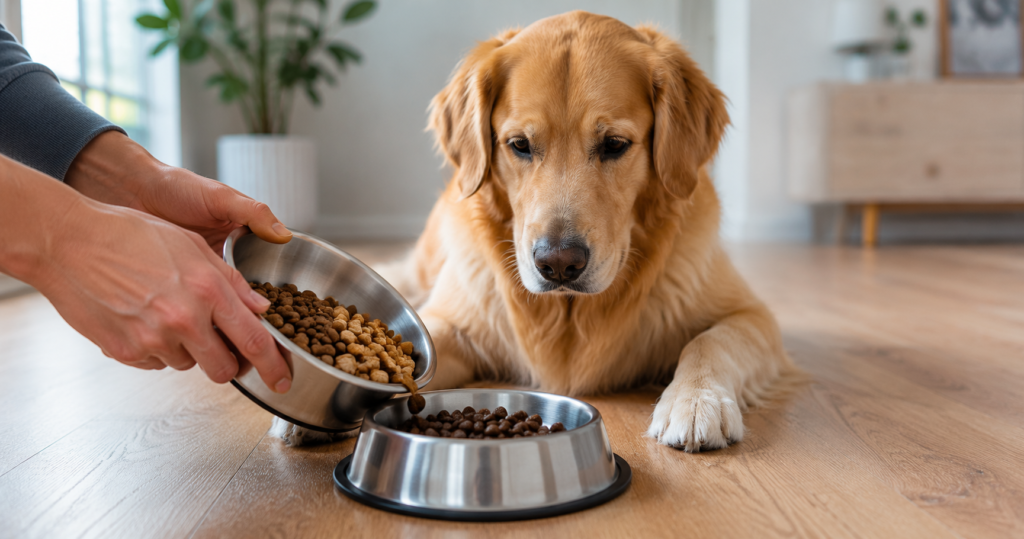
If you want to know how to change dog food safely, the key is usually to make the transition gradually rather than replacing the entire diet in one meal.
A sudden food change can contribute to digestive upset in some dogs. Loose stool, diarrhea, vomiting, reduced appetite, or abdominal discomfort may appear while the digestive system is adjusting to a different diet.
A gradual transition also gives you time to observe how your dog responds. The exact pace does not need to be identical for every dog, especially when age, health, previous digestive problems, or a veterinarian-directed diet are involved.
Quick answer: For most routine diet changes, introduce the new food gradually rather than switching all at once. Mix the current and new foods, then progressively increase the new food over about a week or longer if needed. Monitor your dog’s appetite, stool, vomiting, comfort, and energy. If your veterinarian has given you a specific feeding plan, follow that plan instead.
Watch the Video
How to Switch Your Dog’s Food Gradually
This Pawsvexa Short shows the basic principle of introducing a new dog food gradually rather than replacing the previous diet all at once.
How to Change Dog Food Safely: Why a Gradual Transition Matters
Dogs do not all respond to dietary changes in the same way. Some tolerate a new food without obvious problems, while others develop loose stool, diarrhea, vomiting, reduced appetite, or other digestive signs.
The American Animal Hospital Association recommends changing foods gradually over a week or more when a change is necessary, allowing time for the digestive system to adjust.1
AAHA’s Nutrition and Weight Management Guidelines also state that diet adjustments over a 4- to 7-day period may reduce the occurrence of negative gastrointestinal responses.2
This does not mean that every sudden food change will make a dog ill. It means that, for a routine transition, there is usually little benefit in changing everything immediately when a slower approach allows better observation and adjustment.
How Long Should a Dog Food Transition Take?
For many healthy dogs undergoing a routine diet change, about a week is a useful general starting point.
However, seven days should not be treated as a rigid deadline. AAHA specifically describes a transition over a week or more, and individual tolerance can vary.1
Some dogs may need a slower process, particularly if they have previously developed digestive problems during diet changes or have an underlying medical condition.
Important: A transition schedule is a guide, not a race. If your dog is not tolerating the change well, do not keep increasing the new food simply because the calendar says it is time.
1. Start With Mostly the Current Food
Begin with the food your dog already knows and add a smaller amount of the new diet.
The purpose of the first stage is simply to introduce the new food without replacing the entire meal at once.
Watch how your dog responds before increasing the amount further.
2. Gradually Increase the New Food
If your dog is eating normally and their stool remains acceptable, gradually increase the amount of new food while decreasing the old food.
You do not need to treat one exact percentage schedule as correct for every dog. The practical goal is a progressive transition rather than an abrupt replacement.
For many dogs, this process takes roughly a week. Some may need longer.
3. Keep the Rest of the Diet as Consistent as Possible
A food transition is easier to evaluate when you are not changing several other things at the same time.
If possible, avoid introducing multiple new treats, chews, table foods, toppers, supplements, and other dietary extras during the same period.
If digestive problems develop after five different foods were introduced at once, it becomes much more difficult to identify which change may be relevant.
4. Check the Feeding Amount on the New Food
Do not assume that the same cup, scoop, pouch, or can of two different foods provides the same amount of energy.
Different diets may have different feeding recommendations and calorie densities. Once the new food becomes a larger part of the diet, check the manufacturer’s feeding information and consider your dog’s body weight, body condition, activity, life stage, and veterinary recommendations.
WSAVA nutrition guidance emphasizes that feeding recommendations should be tailored to the individual animal rather than treated as one universal plan.3
5. Monitor More Than the Food Bowl
A successful food transition is not only about whether your dog eats the new food.
Pay attention to:
- appetite;
- stool consistency and frequency;
- vomiting;
- abdominal comfort;
- energy and normal behavior;
- willingness to eat the new diet;
- any sudden change from your dog’s usual routine.
Vomiting, diarrhea, appetite loss, abdominal pain, bloating, bleeding, and dehydration can occur with many digestive disorders and should not automatically be blamed on a new food.4
6. What if Your Dog Gets Loose Stool or Diarrhea?
Mild stool changes may occur during a diet transition in some dogs. If this happens, avoid accelerating the switch further while you assess how your dog is doing.
Look at the whole dog, not only the stool.
A dog that has slightly softer stool but remains bright, comfortable, interested in food, and otherwise normal is different from a dog with repeated watery diarrhea, vomiting, weakness, blood, pain, or loss of appetite.
Significant or persistent diarrhea deserves veterinary advice, especially when it occurs with other signs of illness.
Diarrhea has many possible causes, so a recent diet change does not prove that the food itself is responsible.4
7. What if Your Dog Vomits During the Transition?
Do not automatically assume that vomiting is a normal part of switching food.
An isolated episode may not always indicate a serious problem, but repeated vomiting requires more attention.
Merck Veterinary Manual notes that repeated or long-term vomiting can be associated with weakness, lethargy, dehydration, weight loss, and electrolyte disturbances.5
If vomiting continues, your dog cannot keep water down, appears weak or painful, has blood in the vomit, develops abdominal swelling, or shows other concerning signs, contact a veterinarian.
8. Know When to Contact Your Veterinarian
A routine diet transition should not make your dog significantly unwell.
Contact your veterinarian if you notice:
- repeated or persistent vomiting;
- severe or persistent diarrhea;
- blood in vomit or stool;
- marked weakness or lethargy;
- significant abdominal pain or swelling;
- refusal to eat together with other signs of illness;
- signs of dehydration;
- a sudden major change in behavior;
- digestive signs that are worsening rather than improving.
Digestive signs can result from infections, parasites, foreign objects, toxins, inflammatory disease, pancreatitis, and many other medical problems. Do not repeatedly change foods in an attempt to treat a dog that appears genuinely unwell.
9. Dogs on Therapeutic Diets Need an Individual Plan
If your veterinarian has prescribed a diet because of a medical condition, the transition may need to be handled differently from a routine food change.
This can apply to dogs receiving nutrition plans for gastrointestinal disease, kidney disease, urinary disease, food-related diagnostic trials, weight management, or other medical problems.
WSAVA recommends an individually tailored nutrition plan, and the dog’s medical condition may affect both the choice of food and how it should be introduced.3
Do not change a prescribed diet schedule, add supplements, or introduce multiple additional foods without checking whether they fit the veterinary plan.
10. Avoid Repeated Unnecessary Food Changes
Changing from one food to another every few days can make digestive problems harder to interpret.
AAHA advises avoiding unnecessary frequent diet changes and recommends making necessary changes gradually.1
If your dog is doing well on a nutritionally appropriate diet, there is usually no need to keep switching foods simply for variety.
11. What if Your Dog Refuses the New Food?
Some dogs are cautious about a new smell, texture, or flavor and may need a slower introduction.
However, do not automatically assume that persistent refusal is simply picky behavior.
Reduced appetite can also occur with nausea, pain, dental problems, gastrointestinal disease, medication effects, and many other conditions.
If your dog consistently refuses food or appears unwell, contact your veterinarian rather than repeatedly offering different diets.
12. Reassess Once the Transition Is Complete
Finishing the transition does not mean you should stop observing your dog.
Over the following days and weeks, continue to monitor:
- body weight and body condition;
- appetite;
- stool quality;
- vomiting or digestive discomfort;
- energy and activity;
- skin or coat changes;
- whether the feeding amount seems appropriate.
If something does not seem right, discuss it with your veterinarian rather than assuming that every problem can be solved by trying another food.
Common Dog Food Transition Mistakes
- Replacing the entire old diet in one meal without a medical reason.
- Following a rigid schedule even when the dog is developing digestive signs.
- Changing several foods, treats, and supplements at the same time.
- Assuming the same scoop size provides the same calories in every diet.
- Ignoring persistent vomiting or diarrhea because a food change recently occurred.
- Repeatedly changing diets without identifying why the dog is having problems.
- Ignoring a veterinarian-prescribed transition plan.
Frequently Asked Questions
Can I switch my dog’s food immediately?
For most routine diet changes, a gradual transition is preferred. AAHA recommends changing foods gradually over a week or more. If your veterinarian has told you to change the diet differently because of a medical problem, follow that individual plan.1
Is seven days always enough to change dog food?
No. About a week is a useful general starting point, not a fixed deadline. Some dogs may need longer, particularly if they have a history of digestive sensitivity.
Can I mix old and new dog food together?
Yes. Mixing the two foods and progressively increasing the new diet is a practical way to make a gradual transition.
What should I do if my dog gets diarrhea after changing food?
Do not continue accelerating the transition if your dog is clearly not tolerating it. Monitor mild stool changes closely and contact your veterinarian if diarrhea is severe, persistent, worsening, contains blood, or occurs with vomiting, weakness, pain, appetite loss, or other concerning signs.
What should I do if my dog vomits after changing food?
Repeated vomiting should not simply be assumed to be a normal food transition. Contact your veterinarian if vomiting continues or is accompanied by weakness, dehydration, blood, abdominal pain, swelling, or other signs of illness.
What if my dog refuses the new food?
A slower introduction may help some dogs, but persistent refusal can also occur with illness, pain, nausea, or other problems. If your dog repeatedly refuses food or appears unwell, contact your veterinarian.
Can I change from dry food to wet food gradually?
Yes. A gradual transition can also be used when changing food format. Remember that wet and dry diets may have very different calorie densities and feeding amounts.
Should I use the same transition schedule for a prescription diet?
Not automatically. If the diet has been prescribed for a medical condition, follow the transition instructions given by your veterinarian.
The Pawsvexa Takeaway
Knowing how to change dog food safely does not require a complicated formula.
Introduce the new food gradually, avoid changing several dietary factors at once, monitor the dog rather than focusing only on the schedule, and allow more time when needed.
For many routine transitions, about a week is a reasonable starting point. Some dogs will need longer.
If significant vomiting, diarrhea, appetite loss, weakness, pain, blood, dehydration, or other concerning signs appear, do not assume the new food is the only possible cause.
And when a veterinarian has prescribed a specific diet or transition schedule, that individualized plan takes priority over general guidance.
Would You Recognize a Pet Emergency?
Get the free Pawsvexa checklist with 12 warning signs every dog and cat owner should know.
Free to download. Created by a qualified veterinarian.
Final Thoughts
A food change does not need to be rushed.
For most healthy dogs undergoing a routine diet transition, gradually increasing the new food over about a week gives the digestive system time to adjust and gives you time to notice whether the dog is tolerating the change.
Some dogs transition easily. Others need more time.
The most useful guide is not the calendar alone, but your dog’s appetite, stool, comfort, energy, and overall health.
If symptoms are significant, persistent, or worsening, contact your veterinarian rather than continuing to change foods at home.
Veterinary Note
A sudden change in appetite, repeated vomiting, persistent diarrhea, blood in vomit or stool, weakness, dehydration, abdominal pain, or abdominal swelling should not automatically be attributed to a new food.
Digestive symptoms can have many causes, and dogs with underlying disease may require examination, diagnostic testing, or an individualized nutritional plan.
If your dog is receiving a veterinary therapeutic diet, undergoing a food-related diagnostic trial, or has a chronic medical condition, follow the feeding and transition instructions provided by your veterinarian.
This article is intended for general educational purposes and does not replace a veterinary examination, diagnosis, treatment, or individualized nutritional recommendation. If your dog becomes unwell or develops persistent, severe, or sudden symptoms, contact a veterinarian.
Sources and Further Reading
-
American Animal Hospital Association. How to Choose the Right Food for Your Pet: A Veterinary-Backed Guide. Updated December 16, 2025.
AAHA -
American Animal Hospital Association. 2021 AAHA Nutrition and Weight Management Guidelines — Feeding Plans for Healthy, Appropriate Weight Cats and Dogs.
AAHA -
World Small Animal Veterinary Association. Global Nutrition Guidelines.
WSAVA -
Merck Veterinary Manual. Introduction to Digestive Disorders of Dogs.
Merck Veterinary Manual -
Merck Veterinary Manual. Vomiting in Dogs.
Merck Veterinary Manual
Written by a veterinarian for Pawsvexa.