
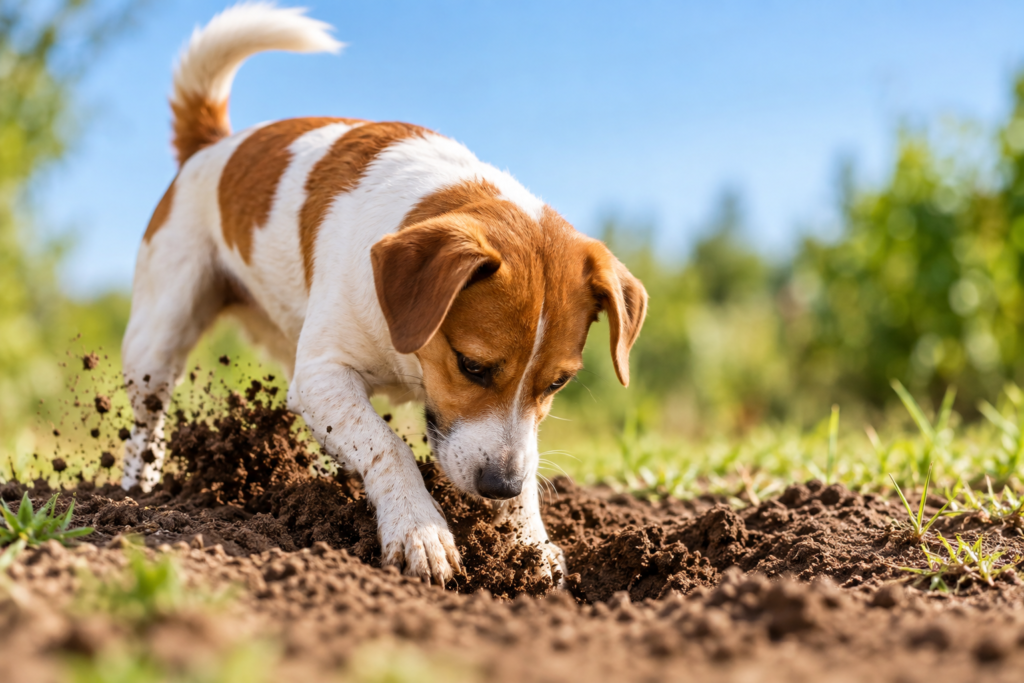
Why do dogs dig? For many dogs, digging is a normal behavior rather than an automatic sign of boredom or a behavioral problem. Dogs may dig while investigating scents, searching for something underground, creating a cooler place to rest, burying valued objects, exploring, or trying to get through a boundary.
The useful question is not simply whether your dog digs. Look at where the digging happens, when it starts, what happens immediately beforehand, and what your dog does afterward. Those details can help you understand what may be maintaining the behavior.
Digging can also become important when it is unusually intense, causes injury, creates an escape risk, or appears together with signs of fear, distress, pain, or another major behavior change.
Quick Answer
Why do dogs dig? Digging is part of the normal canine behavior repertoire. Possible motivations include investigating scents or sounds, cooling down, burying or retrieving objects, play and exploration, insufficient appropriate stimulation, escape behavior, and—in some dogs—stress or separation-related distress.1, 2, 3 The behavior alone does not tell you which explanation applies, so context matters.
Watch the Video
Watch “Why Does Your Dog Dig? It’s Not Always Boredom” on YouTube
The Pawsvexa Short gives the quick answer. This guide explains why dogs dig in more detail, how to read the behavior in context, and what owners can do when digging becomes destructive or unsafe.
Why Do Dogs Dig?
If you are asking why do dogs dig, the first point to understand is that digging itself is not automatically abnormal.
The Merck Veterinary Manual includes digging among behaviors that can form part of the normal canine behavior repertoire, even though those behaviors may be undesirable in a household environment.1
However, the same visible behavior can have very different motivations.
One dog may become interested in a patch of soil because of a scent or sound. Another may expose cooler soil before resting. A dog may bury an object, dig as part of exploration, or repeatedly work at the bottom of a fence because something outside the yard is motivating the behavior.
This is why the hole itself rarely provides the complete answer.
6 Common Reasons Why Dogs Dig
1. Interesting Scents, Sounds, or Something Underground
One reason why dogs dig is that the ground itself can be interesting.
Dogs have highly developed sensory abilities, and some will focus intensely on a location where they detect an odor, movement, or sound beneath the surface. VCA veterinary behavior guidance notes that underground animals and associated odors or sounds can trigger digging in some dogs.2
You may notice that your dog:
- sniffs intensely before digging;
- repeatedly targets one small area;
- stops digging to sniff and then begins again;
- pushes the nose toward the hole;
- returns to the same location on different occasions.
These observations may suggest that something in the environment is maintaining the behavior, but they do not prove exactly what the dog has detected.
2. Digging to Reach Cooler Ground
Another reason why dogs dig is temperature-related behavior.
Some dogs may remove warmer surface soil and expose cooler ground underneath, then lie in the excavated area. This behavior is particularly recognized in some northern breeds, although it is not limited to them.2
Even when a dog appears to be digging for a cooler resting place, digging should never be treated as adequate protection from heat.
Dogs outdoors during warm weather still need reliable access to fresh water, shade, appropriate ventilation, rest, and a safe environmental temperature.5
If a dog appears unwell in warm conditions, move them away from the heat and seek veterinary advice when appropriate. Heat-related illness can become serious quickly.
3. Burying or Retrieving Valued Objects
Some dogs dig to hide food, chews, toys, or other valued objects and may return to retrieve them later.2
This pattern can look very different from random garden digging. You may see the dog arrive with an object, place it in the hole, move soil over it, or repeatedly revisit the same location.
This is another example of why digging should not automatically be labelled as boredom.
4. Play, Exploration, and Insufficient Appropriate Stimulation
Digging can also be rewarding in its own right.
Moving soil, following scents, using the paws, and discovering what lies underneath can provide physical and sensory engagement. Merck notes that digging can occur as part of normal exploratory behavior, particularly when a dog is not engaged in more appropriate activities.1
When owners ask why do dogs dig despite regular walks, it is useful to look beyond exercise alone.
A balanced daily routine may include:
- appropriate physical exercise;
- sniffing and exploration;
- interactive play;
- safe chewing opportunities;
- food-based enrichment where appropriate;
- short reward-based training sessions;
- social interaction;
- adequate rest.
The goal is not simply to tire a dog out. Different dogs benefit from different combinations of movement, exploration, learning, interaction, and rest.
5. Trying to Reach Something or Escape
The location of the digging can provide one of the clearest clues.
If you are wondering why do dogs dig under fences, consider what may be happening on the other side. A dog may be trying to reach another animal, follow an interesting scent, explore beyond the property, or escape confinement.2
Digging around boundaries deserves particular attention because successful escape can expose a dog to traffic, other animals, toxins, injury, or becoming lost.
Do not address this only by repeatedly filling the hole. Secure the boundary first and observe what appears to trigger the behavior.
6. Stress or Separation-Related Distress
Stress can sometimes be part of the answer to why dogs dig, but digging alone does not diagnose anxiety or separation anxiety.
The ASPCA describes digging and escape attempts among behaviors that can occur in dogs experiencing separation anxiety, particularly when they happen during the owner’s absence and occur with a wider pattern of distress.3
Other signs may include persistent vocalization, pacing, drooling, destructive behavior around exits, or frantic attempts to escape.
If digging happens mainly when your dog is alone, recording the dog on video can help reveal what happens before the behavior begins and whether other signs of distress are present.
For more context on body language, read Pawsvexa’s guide to dog stress signs.
How to Tell Why Your Dog Is Digging
Understanding why dogs dig usually starts with observing the pattern around the behavior rather than focusing only on the damage left behind.
Where Does the Digging Happen?
Is your dog digging beside a fence, underneath shade, near plants, in soft soil, around one particular patch of ground, or in many unrelated areas?
When Does It Happen?
Does digging appear during warm weather, after the dog is left alone, during energetic play, after noticing another animal, or while calmly exploring outdoors?
What Happens Immediately Before Digging?
Look for behaviors such as intense sniffing, watching something outside the yard, carrying an object, restlessness, or repeated attention toward the same location.
What Happens Immediately Afterward?
Does the dog lie in the hole, retrieve an object, continue following a scent, leave calmly, or attempt to get through a fence?
How Intense Is the Behavior?
A dog that digs briefly while exploring presents a different pattern from a dog that repeatedly digs at an exit, injures the paws, or seems unable to disengage from the behavior.
Does It Happen Only When You Are Away?
This distinction can be important. Behavior that occurs almost exclusively during owner absence should be evaluated differently from relaxed outdoor digging that also occurs when people are present.
How to Manage Unwanted Digging
Learning why dogs dig can help owners choose a management strategy that addresses the likely motivation instead of simply stopping the behavior for a few minutes.
Meet Appropriate Behavioral Needs
If your dog appears to need more appropriate activity, consider adding suitable enrichment rather than simply increasing physical exercise indefinitely.
Options can include sniffing walks, scent games, interactive play, safe food toys, chewing opportunities, exploration, and short reward-based training sessions.
Prevent Access When Digging Is Unsafe
Management is especially important when digging creates an escape risk, causes injury, or gives the dog access to potentially hazardous areas.
Supervise outdoor access where necessary and secure weak points in fences and gates.
Do not use toxic garden chemicals, dangerous traps, sharp objects, or other hazardous materials in an attempt to prevent digging.
Consider an Appropriate Digging Area
For some dogs that clearly enjoy digging, providing an acceptable location can be more practical than trying to eliminate the behavior completely.
VCA veterinary behavior guidance describes a designated digging area as one possible strategy for dogs strongly motivated to dig.2
An appropriate loose substrate and safe objects to discover can help make the permitted area more rewarding.
A designated digging area is not a universal solution. It will not by itself resolve separation-related distress, an insecure boundary, overheating, or another underlying concern.
Reward the Behavior You Want
When your dog chooses an appropriate activity instead of digging in a restricted location, reinforce that choice with something the dog values.
The American Veterinary Society of Animal Behavior recommends reward-based methods for dog training and behavior modification and advises against aversive methods.4
The practical approach is to manage the environment, prevent unsafe opportunities where possible, redirect toward an acceptable behavior, and reinforce appropriate choices.
Punishing a dog after discovering a hole is particularly unhelpful because the correction may occur long after the digging happened and does not teach the dog which behavior should replace it.
Why Do Dogs Dig So Much?
If you are asking why do dogs dig so much, frequency matters—but frequency alone still does not identify the cause.
A dog may repeatedly dig because the behavior is highly rewarding, because the same environmental trigger remains present, because appropriate outlets are limited, or because the behavior is associated with frustration or distress.
Merck also notes that when otherwise normal behaviors become excessive, a more detailed behavioral assessment may be appropriate.1
A sudden increase in digging is therefore worth noticing, particularly when it is accompanied by other meaningful changes in the dog’s behavior or health.
When Digging Deserves More Attention
Most occasional digging is not a veterinary emergency.
However, contact your veterinarian or an appropriately qualified behavior professional when:
- digging begins suddenly and represents a major change from your dog’s normal behavior;
- the behavior becomes unusually intense, repetitive, or difficult to interrupt;
- your dog damages paws, nails, teeth, or another part of the body;
- digging is part of repeated or dangerous escape attempts;
- destructive behavior happens mainly when your dog is alone and is accompanied by other signs of distress;
- your dog also develops significant changes in appetite, activity, mobility, sleep, temperament, or normal interaction;
- you suspect pain, illness, significant fear, or anxiety.
A sudden behavioral change does not automatically mean disease, but it should not automatically be dismissed as boredom or stubbornness either.
Frequently Asked Questions
Is Digging Normal for Dogs?
Yes. Digging can be part of the normal canine behavior repertoire.1 It becomes more important to manage when it is destructive, unsafe, excessive, associated with distress, or incompatible with the dog’s environment.
Why Do Dogs Dig Even When They Get Plenty of Exercise?
Physical exercise is only one part of a dog’s daily needs. Dogs may dig because of scents, exploration, cooler soil, burying behavior, an escape opportunity, stress, or because digging itself is rewarding.
This is why simply adding more exercise is not always the correct answer.
Why Do Dogs Dig in the Same Place?
If a dog repeatedly returns to one location, something about that area may continue to reward the behavior. Possibilities include an interesting scent or sound, softer or cooler soil, a previously buried object, or access toward something outside a boundary.
Why Do Dogs Dig Before Lying Down?
Some dogs may dig or scrape a surface before settling. Outdoors, exposing cooler soil can be one possible explanation.2
If your dog repeatedly struggles to settle, appears painful, pants unusually, or frequently changes position, consider the complete clinical picture rather than assuming the behavior is simply a normal resting ritual.
Why Do Dogs Dig Under Fences?
A dog may be trying to reach something outside the property or escape the area. Secure the boundary first, then investigate what appears to trigger the behavior.
Does Digging Mean My Dog Is Bored?
Not necessarily. Insufficient appropriate stimulation can contribute in some dogs, but digging has many possible motivations. Avoid diagnosing boredom from the hole alone.
Can Anxiety Cause Digging?
Yes, digging can occur as part of a stress or separation-related pattern, but it is not diagnostic on its own.1, 3
Look at when the behavior happens and whether it occurs with other signs such as pacing, vocalization, drooling, destructive escape attempts, or marked distress.
Should I Stop My Dog From Digging Completely?
Not always. If digging is safe and acceptable in a particular area, some dogs can be given an appropriate place to perform the behavior.
Digging that causes injury, creates an escape risk, exposes the dog to hazards, or occurs with significant distress requires more active management.
The Pawsvexa Takeaway
Why do dogs dig? There is no single explanation that fits every dog.
Start with context. Look at where the behavior occurs, when it begins, what happens immediately beforehand, and what your dog appears to gain from it.
Provide appropriate behavioral outlets, prevent access where digging is unsafe, secure escape points, and reinforce useful alternatives.
If digging becomes unusually intense, causes injury, appears mainly during absences, involves repeated escape attempts, or occurs alongside a significant health or behavior change, investigate further rather than treating the hole as the whole problem.
Would You Recognize a Pet Emergency?
Pet Emergency Checklist
Digging itself is rarely an emergency, but every dog and cat owner should know which sudden warning signs may require urgent veterinary attention.
Final Thoughts
Why do dogs dig? For one dog, digging may be ordinary exploration. For another, it may be connected with an interesting scent, cooler soil, burying an object, getting through a boundary, or distress during owner absence.
Good management begins with observation rather than punishment.
Give normal behavior appropriate outlets where possible, protect your dog from unsafe situations, reinforce useful alternatives, and pay attention when the pattern suddenly changes.
Understanding the context behind digging gives you a much better chance of choosing a response that fits the individual dog and the situation.
Veterinary Note
Digging is a behavior, not a diagnosis. Its significance depends on factors such as the dog’s environment, daily routine, physical health, emotional state, the location and timing of the behavior, its intensity, and any other signs occurring at the same time.
A sudden or marked behavior change deserves additional attention, particularly when it occurs with signs of pain, reduced mobility, appetite changes, unusual restlessness, fear, self-injury, repeated escape attempts, or another significant change from the dog’s normal pattern.
This article is intended for general educational purposes and does not replace a veterinary examination, diagnosis, individualized behavior assessment, or treatment plan. If your dog is injured, unwell, showing severe distress, or repeatedly attempting to escape in a way that could cause harm, contact your veterinarian.
Sources and Further Reading
- Merck Veterinary Manual — Behavior Problems of Dogs
- VCA Canada Animal Hospitals — Dogs and Destructive Digging
- ASPCA — Separation Anxiety in Dogs
- American Veterinary Society of Animal Behavior — Humane Dog Training Position Statement
- American Veterinary Medical Association — Warm Weather Pet Safety
Written by a veterinarian for Pawsvexa.